Tint installers may position and trim window film on the outside of automotive glass during preparation, but they are cutting the film, not the glass. Exterior fitting can help installers measure, shape, trim, and heat-shrink film before it is transferred to the inside surface of the window.
The exact method depends on the vehicle, window shape, film, equipment, and installer. Professional shops may also use computer-cut patterns to reduce manual trimming.
Why Is Tint Film Positioned On The Outside?
Automotive window tint is generally installed on the inside of the glass. However, installers may temporarily place the film against the exterior surface during preparation.
Vehicle windows are rarely perfectly flat. Windshields, rear windows, and some side windows have curves that require the film to be shaped accurately.
Exterior positioning may allow an installer to:
- Measure the film against the glass
- Establish the correct shape
- Trim excess material
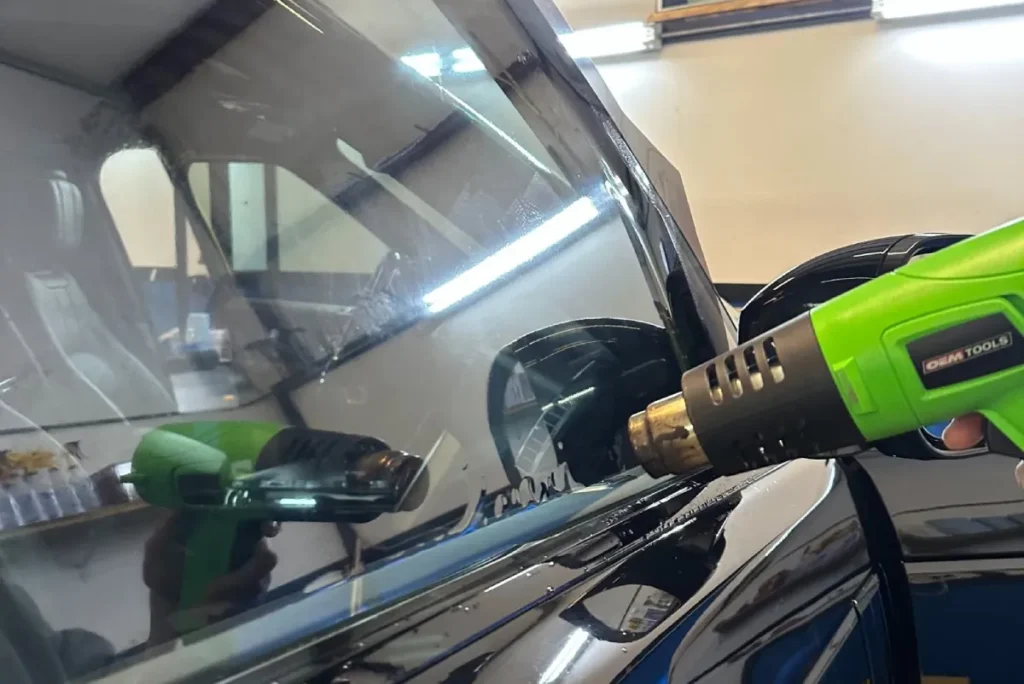
- Heat-shrink curved sections
- Check alignment
- Prepare the film before interior installation
For drivers researching window tinting in Durham NC, understanding this step can make the installation process easier to follow.
Does Cutting Film On The Outside Mean The Glass Is Being Cut?
No. The purpose is to trim the window film, not the automotive glass.
Professional tint installation requires controlled cutting techniques and careful handling. An installer should not intentionally cut into the glass to shape the film.
| Process | What Is Cut? | Purpose |
| Exterior film trimming | Window film | Shape the film |
| Computer cutting | Window film | Create a vehicle-specific pattern |
| Hand trimming | Window film | Fine-tune the fit |
| Glass cutting | Glass | Not part of normal tint installation |
| Interior installation | Film | Apply the prepared film |
The goal is to create an accurate film pattern that fits the window without unnecessarily affecting the glass, seals, trim, or surrounding surfaces.
How Do Professional Tint Installers Shape Film?
Professional tint installers typically use either computer-cut patterns or hand-fitted film.
- Computer-cut patterns: Use vehicle-specific templates for consistent sizing, efficient preparation, and reduced manual trimming.
- Hand-fitted film: Allows installers to adjust the film to the vehicle’s actual glass and account for minor variations.
Both methods can produce quality results when performed correctly. The key is achieving a precise fit without damaging the vehicle.
Why Does Window Film Need To Be Heat-Shrunk?
Many automotive windows are curved, so heat shrinking helps the film conform properly to the glass, especially on rear windows.
Simplified Tint Installation Process
- Inspect and clean the glass.
- Measure or select the film.
- Shape and trim the film.
- Heat-shrink curved sections.
- Install the film inside the vehicle.
- Squeegee out solution and air.
- Inspect the finished installation.
The process may vary by vehicle and installer.
What Happens Before Film Is Applied Inside?
Proper surface preparation is one of the most important parts of window tint installation.
Dust, oils, hair, and other contaminants can become trapped beneath the film and create visible imperfections. The interior glass should therefore be thoroughly cleaned before the film is installed.
Typical preparation includes:
- Removing dirt and dust
- Cleaning the glass
- Inspecting the surface
- Removing contamination
- Preparing the film
- Applying installation solution
- Positioning the film
- Squeegeeing the surface
- Inspecting the edges
This is why window tinting in Durham should be viewed as a professional installation process rather than simply applying dark film to a window.
What Tools Are Used To Trim Window Tint?
Professional installers may use several tools depending on their technique.
Common equipment includes:
- Precision film knives
- Glass scrapers
- Squeegees
- Heat guns
- Spray bottles
- Film plotters
- Measuring tools
- Microfiber towels
Tools alone do not determine installation quality. Proper handling and technique are equally important.
A precision cutting tool can create a clean film edge when used correctly, while improper use can create unnecessary risk.
Can Tint Film Be Cut While It Is On The Vehicle?
Yes. Film can be trimmed while positioned against the vehicle’s glass during certain installation methods.
The important distinction is that the technician is trimming the film material, not intentionally cutting the vehicle.
Some shops rely primarily on computer-cut patterns, while others use exterior fitting and manual trimming. Many installations combine both approaches.
Vehicle owners should focus less on the specific method and more on whether the shop uses a controlled process that protects the glass, seals, trim, and surrounding surfaces.
What Is A Computer-Cut Tint Pattern?
A computer-cut tint pattern is a digital template matched to a specific vehicle window. A plotter then precisely cuts the film to the pattern before installation.
Computer-cut patterns can reduce manual trimming and improve consistency when accurate templates are available.
However, a perfectly cut pattern cannot compensate for poor glass preparation or incorrect installation. The film still needs to be positioned, applied, and finished properly.
What Is Exterior Film Fitting?
Exterior film fitting is a preparation technique in which film is positioned against the outside of the vehicle glass so the installer can measure, shape, trim, or heat-shrink it.
The film does not remain outside the window. Automotive tint is generally installed on the interior surface.
This explains why a vehicle owner may see an installer working on the outside of a window even though the finished tint will be installed inside.
Does Every Tint Installer Cut Film On The Outside?
No. Installation methods vary between shops and vehicles.
Some installers use computer-cut patterns that require little exterior trimming. Others use manual fitting and heat shrinking. A technician may also use different methods for different windows on the same vehicle.
The method can depend on:
- Vehicle make and model
- Window shape
- Film type
- Template availability
- Shop equipment
- Installer preference
- Technician experience
The quality of the finished installation matters more than whether the installer uses one particular method.
Myth: Professional Tint Should Never Be Cut Near The Glass
A common misconception is that professional installers should never trim film while it is positioned against the vehicle’s glass.
That is not necessarily true.
Exterior fitting and trimming can be legitimate preparation techniques. The important issue is how the technician controls the cutting process and protects the vehicle.
Experienced installers can use appropriate tools, patterns, positioning methods, and techniques to shape film accurately.
Likewise, computer-cut patterns can reduce certain manual cuts but do not eliminate the need for careful installation.
What Should Drivers Look For In A Professional Tint Installation?
Drivers should evaluate the installation process and final results.
Before installation:
- Film type and quality
- Cutting method
- Warranty coverage
- Curing time
- Maintenance requirements
During installation:
- Clean glass preparation
- Proper film positioning
- Careful edge work
- Controlled heat and squeegee use
After installation:
- Even coverage
- Clean edges
- Minimal debris or creases
- Consistent appearance
Temporary visual changes may occur while the film cures.
Why Does Professional Experience Matter?
Window film installation involves glass preparation, film handling, patterning, heat shrinking, positioning, and finishing. Small mistakes can lead to trapped debris, wrinkles, gaps, or uneven edges.
Ceramic Pro Raleigh states that its Durham window tint professionals use current installation techniques and offer KAVACA, ceramic, and carbon film options. The company also states that its carbon film includes a lifetime warranty.
Choosing an experienced installer can help ensure proper film selection, preparation, and installation.
What Happens If Tint Film Is Cut Poorly?
Poorly trimmed film can result in:
- Uneven edges
- Visible gaps
- Excess material
- Wrinkles
- Trapped contamination
- Poor alignment
- Adhesive-related imperfections
Not every installation issue is caused by cutting. Contamination, glass condition, film handling, and curing can also affect the appearance.
A professional inspection can help identify the actual cause.
Exterior Film Preparation Can Be Part Of Professional Tinting
Tint installers may position and trim film on the outside of automotive glass before installing it inside. This can help with sizing, shaping, and heat shrinking, while computer-cut patterns can reduce the need for manual trimming.
The important factors are clean glass preparation, accurate film fitting, controlled handling, proper installation, and careful finishing.
Ceramic Pro Raleigh provides professional window tinting in Durham, offering KAVACA, ceramic, and carbon film options. These technologies are designed to support benefits such as heat reduction, UV protection, glare control, and improved driving comfort.
Contact us today to discuss your window tint options and determine which film and installation approach best fit your vehicle.
People Also Ask
Do tint installers cut film on the outside of the window?
They may. Exterior positioning can help with measuring, shaping, trimming, and heat shrinking before the film is installed on the inside.
Is window tint installed on the inside or outside?
Automotive window tint is generally installed on the inside of the glass. Film may temporarily be positioned outside during preparation.
Can cutting tint film damage car glass?
Improper cutting can create unnecessary risk, which is why controlled tools and professional technique are important. The installer should trim the film without intentionally cutting the glass.
Is computer-cut tint better than hand-cut tint?
Neither method is automatically better for every vehicle. Computer-cut patterns can improve consistency, while experienced manual fitting can account for vehicle-specific variations. Overall installation quality is what matters most.