Yes, ceramic coating requires maintenance to remain effective. It significantly reduces how much effort needed to keep a vehicle clean, but it does not eliminate upkeep entirely. Without consistent washing, inspection, and occasional reinforcement, the coating’s hydrophobic behavior, gloss, and protective qualities will gradually decline.
What Does Ceramic Coating Maintenance Actually Involve?
Ceramic coatings form a semi-permanent, chemically bonded layer over your vehicle’s clear coat. This layer is engineered to resist contamination, but it is still exposed to environmental stressors like road film, mineral deposits, and airborne pollutants. Over time, these contaminants accumulate on the surface and interfere with performance.
For vehicle owners researching ceramic coating in Raleigh, NC, it’s critical to understand this distinction: coatings fail more often due to improper maintenance than to material breakdown.
Core Maintenance Activities
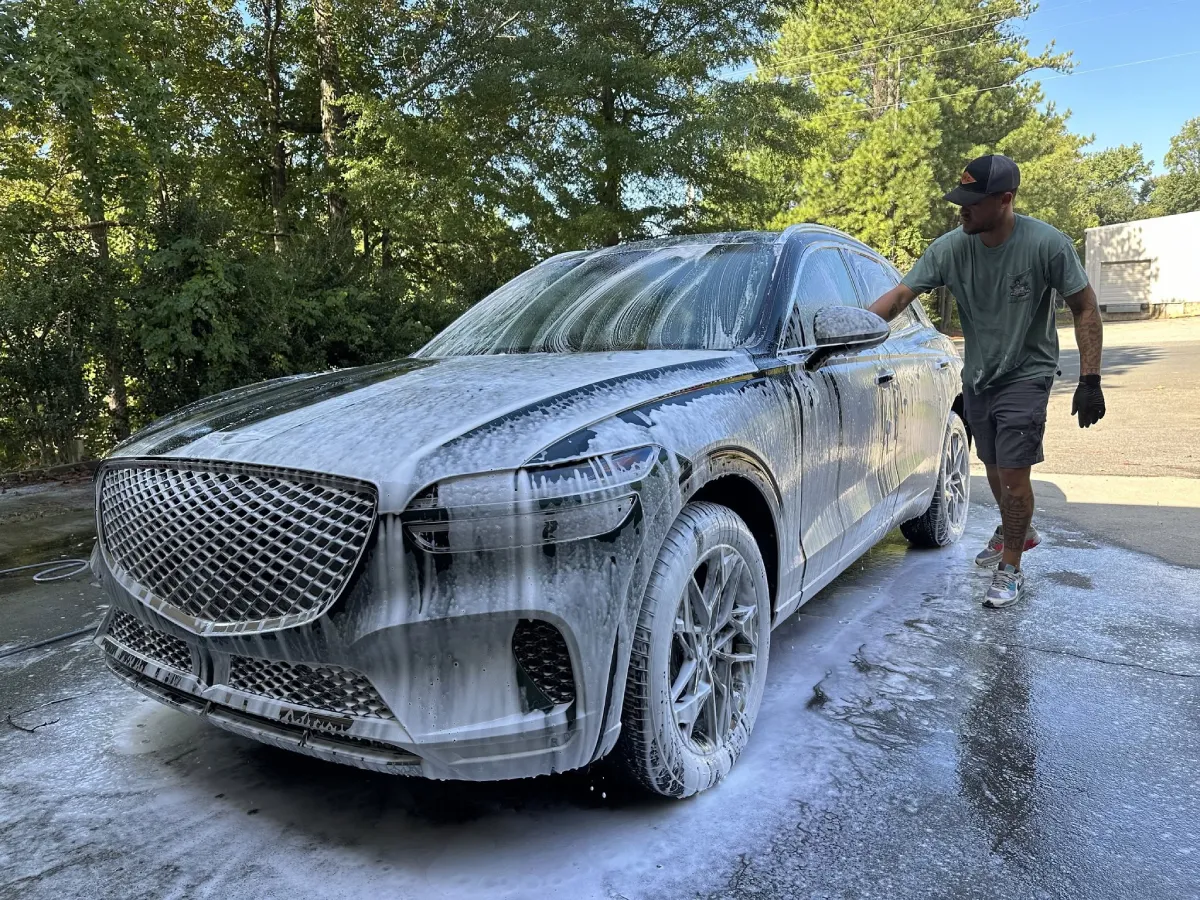
- Routine Washing
Performed every 1–2 weeks using a pH-neutral shampoo and proper hand-washing techniques. - Decontamination Wash
Completed every 3–6 months to remove embedded contaminants such as iron particles and mineral buildup. - Performance Inspection
Monitoring how water behaves on the surface (beading or sheeting) to assess coating health. - Top-Up Protection
Applying silica-based sprays to restore surface performance when needed. - Annual Professional Evaluation
A controlled inspection to determine whether correction or reapplication is necessary.
Ceramic Coating vs Wax vs Sealants: Maintenance Comparison
| Feature | Ceramic Coating | Wax | Paint Sealant |
| Durability | 2–5+ years | 1–3 months | 4–6 months |
| Maintenance Frequency | Moderate | High | Moderate |
| Hydrophobic Properties | Strong | Moderate | Moderate |
| Contaminant Resistance | High | Low | Medium |
| Long-Term Cost | Lower | Higher | Moderate |
When comparing solutions like ceramic coating in Raleigh, the advantage is not the absence of maintenance; it is the predictability and reduced frequency of required care. Unlike wax, which degrades quickly, protective coatings maintain a stable performance profile when maintained correctly.
Key Features Explained (Definition List)
Hydrophobic Behavior
The ability of the surface to repel water, causing it to bead and roll off while carrying light contaminants away.
SiO₂ Layer
A silica-based structure that chemically bonds with the paint, forming a durable and protective barrier.
Chemical Resistance
Protection against acidic substances such as bird droppings, bug residue, and road salts.
UV Stability
Resistance to ultraviolet radiation, reducing oxidation, and paint fading.
Surface Slickness
A low-friction finish that minimizes how strongly contaminants adhere to the paint.
How Often Should You Maintain Ceramic Coating?
Maintenance frequency is driven by exposure conditions and usage patterns. Vehicles driven daily in mixed conditions require more frequent care than garage-kept vehicles.
Recommended Schedule
- Every 1–2 weeks: Proper hand wash
- Monthly: Visual inspection and performance check
- Every 3–6 months: Decontamination wash
- Annually: Professional inspection
During a recent audit for a firm in North Hills, the coating showed early performance loss not due to failure, but because routine washing had been skipped for extended periods. Once contamination was removed, the coating’s original behavior returned.
Signs Your Ceramic Coating Needs Maintenance
Recognizing early indicators allows you to correct issues before they require more intensive intervention.
- Water stops forming tight beads and begins to sit flat
- The surface feels rough even after washing
- Gloss and clarity appear reduced
- Dirt accumulates faster than expected
These conditions are commonly misinterpreted as coating failure. In reality, they usually indicate buildup of contamination, especially for vehicles with Raleigh, NC, ceramic coating exposed to seasonal pollen and mineral-rich water.
Applying Our Surface Integrity Protocol (SIP) to Solve This
To eliminate inconsistent results, we apply a structured methodology called the Surface Integrity Protocol (SIP). This framework focuses on measurable performance indicators rather than assumptions.
SIP Framework
- Baseline Control
Establish proper washing techniques to prevent introducing defects during maintenance. - Contamination Management
Remove bonded contaminants before they interfere with coating performance. - Performance Calibration
Evaluate water behavior as the primary indicator of coating condition. - Layer Reinforcement
Apply maintenance products only when performance metrics decline, not on a fixed schedule. - Lifecycle Tracking
Monitor changes over time to predict when correction or reapplication is necessary.
A client in Brier Creek implemented SIP and avoided unnecessary reapplication by identifying that performance loss was due to mineral buildup rather than coating degradation.
Common Maintenance Mistakes to Avoid
Even high-quality coatings can underperform when maintenance practices are incorrect.
High-Impact Errors
- Using Automatic Brush Washes
These introduce micro-abrasions and degrade the coating surface. - Skipping Routine Washing
Allows contaminants to accumulate and bond more aggressively. - Using Harsh Chemicals
Strong alkaline or acidic cleaners can interfere with coating properties. - Overapplying Products
Layering incompatible products can reduce hydrophobic performance. - Misdiagnosing Surface Issues
Treating contamination as coating failure often leads to unnecessary correction.
These mistakes are frequently observed among vehicles with Raleigh ceramic coating, where owners assume the coating eliminates the need for disciplined care.
Debunking a Common Industry Myth
Myth: “Ceramic Coating Is Maintenance-Free”
This claim is misleading and contributes to premature coating failure.
Ceramic coatings are engineered to reduce maintenance effort, but they do not prevent contamination from accumulating on the surface. Without proper cleaning, this buildup masks the coating’s hydrophobic properties and reduces its effectiveness.
A vehicle owner in Five Points delayed maintenance under the assumption that no upkeep was required. Within a year, the surface required corrective polishing, not because the coating failed, but because it had been neglected.
Best Practices for Long-Term Effectiveness
Maintaining a ceramic-coated vehicle does not require complexity, but it does require consistency and proper technique.
Maintenance Checklist
- Use a two-bucket wash method to minimize contamination transfer
- Wash with a pH-neutral shampoo designed for coated surfaces
- Dry using clean microfiber towels or touchless air drying
- Avoid washing in direct sunlight to prevent water spotting
- Apply silica-based maintenance products based on observed performance
Following these practices ensures the coating continues to function as designed, preserving both protection and appearance.
Why Maintenance Matters for Ceramic Coating Raleigh, NC
Environmental conditions play a significant role in the rate at which contaminants accumulate. Factors such as humidity, pollen, and road film increase the need for consistent maintenance.
For those investing in ceramic coating, the difference between a coating that lasts years and one that underperforms often comes down to maintenance habits. Proper care not only preserves the coating but also protects the underlying paint from long-term damage.
In Summary
Ceramic coating is a durable and effective protective solution, but its performance depends entirely on proper maintenance. Routine washing, contamination control, and periodic evaluation ensure that the coating continues to deliver consistent results over time, especially when maintained under a professional system like Ceramic Pro Raleigh.
If you want accurate diagnostics and a structured maintenance approach, contact us today. Our team applies proven systems, such as the Surface Integrity Protocol, to keep your coating performing at its highest level, without unnecessary services or guesswork.
People Also Ask (FAQ)
Does ceramic coating wear off if not maintained?
It does not disappear immediately, but its performance declines as contaminants build up and interfere with the surface.
Can I wash my car normally after ceramic coating?
Yes, but proper technique is essential. Use pH-neutral products and avoid abrasive tools or automated brush systems.
How do I restore the performance of a ceramic coating?
A thorough decontamination wash followed by a silica-based booster typically restores water behavior and gloss.
How can I tell if my coating is still working?
Water behavior is the most reliable indicator. Strong beading or sheeting after washing suggests the coating is still active.
Is professional maintenance necessary every year?
Not always, but periodic professional evaluation helps identify early-stage issues before they require correction.