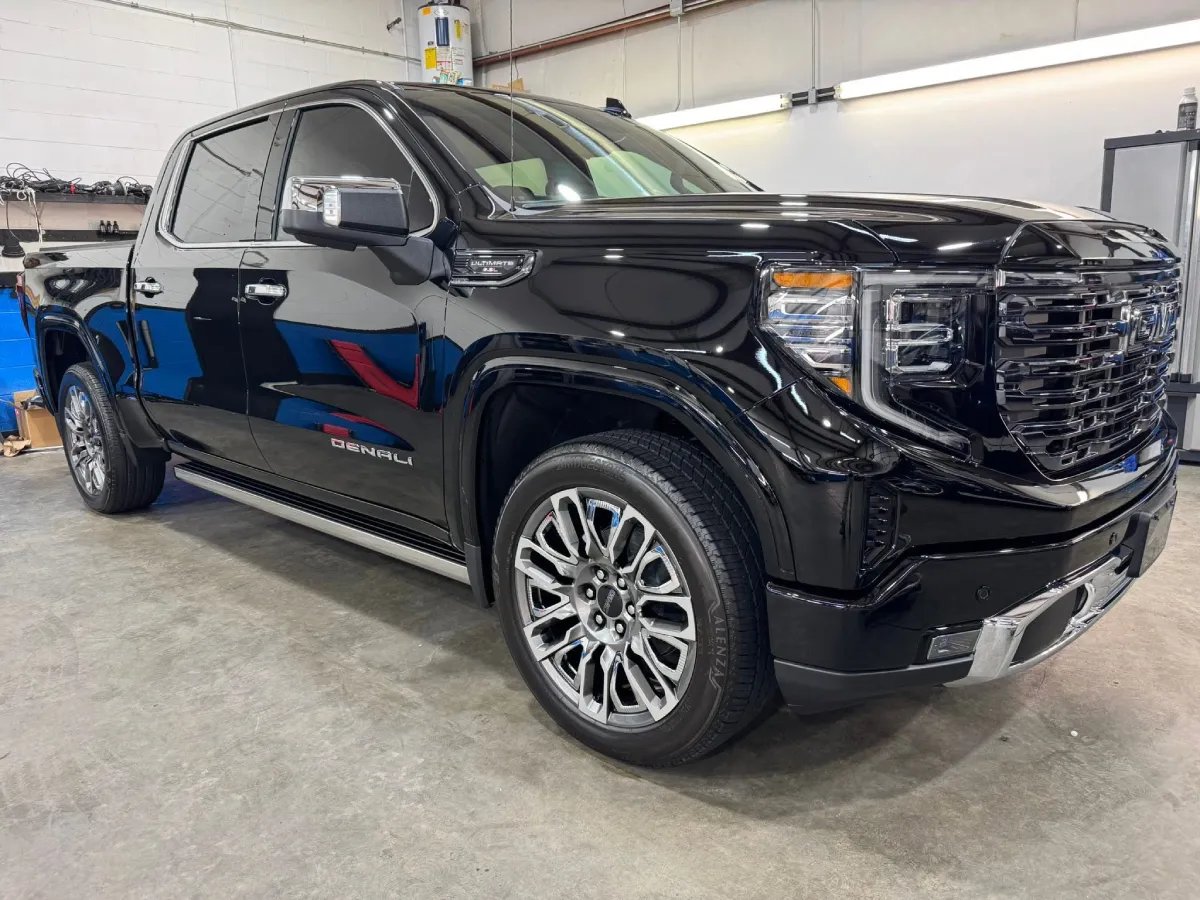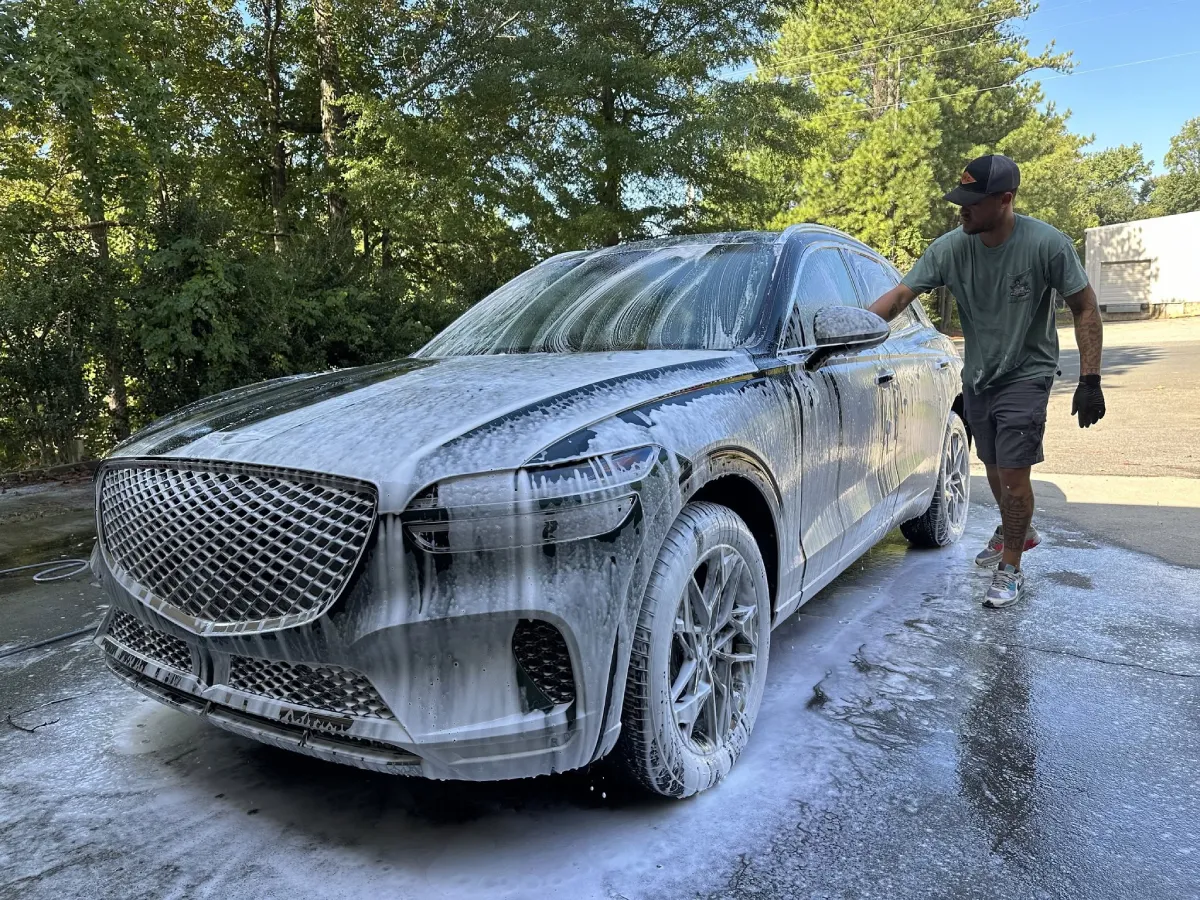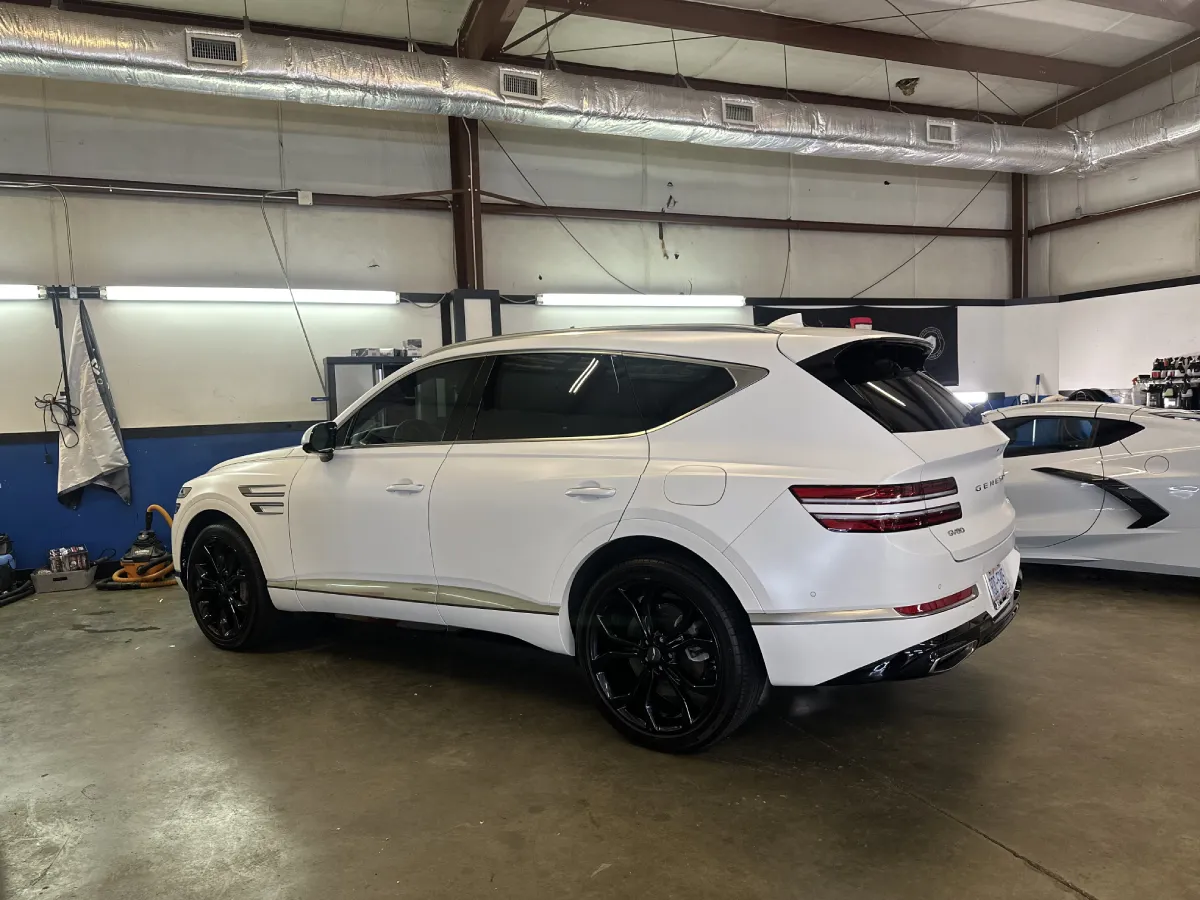
Full car detailing costs can vary widely depending on the level of service and the vehicle’s condition. Basic packages are generally more affordable, while advanced services like paint correction or ceramic coating are significantly more expensive. This variation isn’t just about time; it reflects the depth of restoration, the expertise required, the quality of products used, and how much work the vehicle actually needs.
At its core, detailing is a structured process that restores a vehicle’s appearance and protects its surfaces in the long term. Unlike a car wash, which focuses on surface-level cleaning, full detailing involves correction work, chemical decontamination, and protective application designed to extend the life and finish of both interior and exterior materials.
Typical Cost Breakdown for Full Car Detailing
| Service Type | Cost Level | What You’re Paying For |
| Maintenance Detail | Lower tier | Basic cleaning plus light surface protection |
| Full Interior & Exterior Detail | Mid-range | Deep cleaning with interior and exterior enhancement |
| Paint Correction Detail | Upper tier | Removal of swirls, oxidation, and minor surface defects |
| Ceramic Protection Package | Premium tier | Long-term protective coating system with durability benefits |
This structure reflects how professional detailing studios price services based on measurable labor intensity, technical complexity, and expected results, rather than on arbitrary packages.
What Full Car Detailing Actually Includes
A full detail is a multi-step restoration process that improves both appearance and surface condition, which is why car detailing in Raleigh, NC, services often focus on systematic cleaning, correction, and protection rather than just a quick cosmetic upgrade.
Interior Detailing:
Deep cleaning of carpets, seats, headliner, dashboard, door panels, and air vents using steam, extraction tools, and specialized cleaning agents.
Exterior Detailing:
Washing, chemical decontamination, polishing, and protective sealing of painted surfaces, trim, glass, and wheels.
Paint Correction:
Machine polishing process that removes swirl marks, light scratches, oxidation, and haze from the clear coat layer.
Decontamination Treatment:
Removal of bonded contaminants such as brake dust, tar, industrial fallout, and road film using chemical and mechanical methods.
Protective Coatings:
Application of wax, synthetic sealants, or ceramic coatings to protect the surface from UV rays, chemicals, and environmental damage.
Key Factors That Influence Detailing Costs
Several important variables determine the final price of a full detailing service:
1. Vehicle Size and Surface Area
Larger vehicles require significantly more labor, product, and machine time. SUVs, trucks, and vans often cost more than compact cars due to increased surface coverage.
2. Condition of the Vehicle
A lightly maintained vehicle is faster and easier to detail than one with stained interiors or heavily swirled paint. Neglected vehicles may require multi-stage correction work.
3. Level of Service Selected
Basic detailing focuses on cleaning and light enhancement, while premium packages involve correction and long-term protection systems.
4. Product Quality and Systems Used
Professional detailing uses high-grade compounds, microfiber systems, and, sometimes, certified ceramic coating systems, which increase cost but improve durability.
5. Labor Skill and Experience
Experienced technicians can safely correct paint defects without damaging the clear coat, which increases service value and pricing.
6. Time Required
A basic detail may take 2–4 hours, while a full correction detail can exceed 12–15 hours, depending on the condition.
7. Work Environment
Indoor, controlled environments reduce contamination during polishing and coating application, improving results but increasing operational cost.
Interior vs Exterior Detailing Cost Structure
| Category | Interior Focus | Exterior Focus |
| Main Objective | Cleanliness + restoration | Paint correction + protection |
| Common Issues | Stains, odors, wear marks | Swirls, oxidation, contamination |
| Time Requirement | Moderate to high | Moderate to high |
| Cost Drivers | Fabric condition, odor removal | Defect severity, correction level |
Interior work often becomes more expensive when odor removal or deep stain extraction is required, especially with car detailing in Raleigh services that prioritize thorough restoration. Exterior work becomes more costly when paint correction or coating preparation is involved, as these processes demand additional time, precision, and technical expertise.
Real-World Factors That Affect Pricing
In practice, detailing costs are heavily influenced by real vehicle conditions rather than standardized assumptions.
Vehicles that undergo frequent automated washing often develop swirl marks and micro-scratches in the clear coat. These require machine polishing to restore gloss and clarity.
Some vehicles accumulate environmental contaminants, such as sap, pollen, and industrial fallout, that adhere to paint surfaces. These contaminants must be removed before any polishing or sealing can be performed safely.
Highway-driven vehicles tend to develop road film and small impact abrasions, which increase preparation time and correction requirements.
These real-world conditions explain why two vehicles of the same model can have completely different detailing costs.
Why Professional Detailing Costs More
High-quality detailing services are built on structured processes, technical skill, and controlled execution, not speed or volume.
Professional studios like Phenomenal Detailing take a precision-first approach, using inspection-based workflows to evaluate paint condition before any correction begins. This level of assessment, common in high-quality Raleigh, NC car detailing, ensures the right polishing method is applied to each panel rather than relying on a one-size-fits-all process.
Advanced services like ceramic coating require certified application techniques, surface preparation, and curing time under controlled conditions. These steps significantly increase cost but provide long-term protection against UV exposure, chemical damage, and environmental wear.
- Experience: Technicians understand how paint behaves under correction and how to avoid over-polishing
- Expertise: Proper use of polishing systems, pads, and coating chemistry
- Authoritativeness: Use of established detailing methodologies and professional systems
- Trustworthiness: Transparent service explanations and documented results
These factors separate professional detailing from basic cosmetic cleaning.
Common Misconceptions About Detailing Costs
“All detailing services deliver the same results.”
This is incorrect. A basic wash and a paint correction detail are fundamentally different processes. One focuses on appearance, while the other restores surface condition at a microscopic level.
“Higher prices are always unnecessary.”
Higher pricing often reflects:
- Multi-hour correction work
- Specialized tools and compounds
- Controlled application environments
- Long-term durability outcomes
Lower-priced services typically prioritize speed over depth, which affects long-term results.
Environmental Impact on Detailing Needs
Environmental exposure plays a major role in both service frequency and pricing.
Urban driving conditions increase exposure to brake dust and airborne pollutants, which bond to exterior surfaces over time. Suburban environments introduce organic contaminants such as pollen and tree sap, which require chemical removal before polishing.
Vehicles exposed to highway driving experience higher levels of road film and micro-abrasions from debris, often requiring more extensive exterior correction and protection work.
These environmental differences explain why detailing requirements vary significantly even among similar vehicles.
How to Choose a Reliable Detailing Provider
When selecting a detailing service, focus on:
- Clear explanation of service levels and outcomes
- Evidence of previous work (before-and-after results)
- Proper paint correction experience
- Use of professional-grade products and systems
- Controlled indoor working environment
- Transparent pricing without hidden add-ons
A trustworthy provider prioritizes process clarity and realistic expectations over aggressive upselling.
In Summary
Full car detailing is a structured restoration process that combines cleaning, correction, and protection. Pricing varies because each vehicle requires a different level of labor, skill, and product application based on its condition and environment.
Rather than focusing solely on cost, it is more important to evaluate the quality of the process, the technician’s expertise, and the long-term protection outcomes. These factors determine whether detailing provides temporary appearance improvement or lasting surface preservation.
For professional-grade results, structured correction systems, and durable protection solutions, contact us at Ceramic Pro Raleigh. Experience detailing built on precision, transparency, and long-term vehicle care.
Frequently Asked Questions
How much does full car detailing cost on average?
Most full detailing services vary widely in cost depending on the vehicle’s condition and the depth of service required, with basic packages on the lower end and more intensive restoration work reaching significantly higher tiers.
How long does a full detail take?
Anywhere from 3 to 15+ hours, depending on vehicle size and the level of correction needed.
Is ceramic coating included in detailing?
Not always. It is typically an optional premium add-on or separate service.
Can detailing remove scratches?
Light swirl marks can be corrected, but deep scratches may require paint repair.
How often should I get my car detailed?
Every 4–6 months is recommended for maintaining appearance and protection.