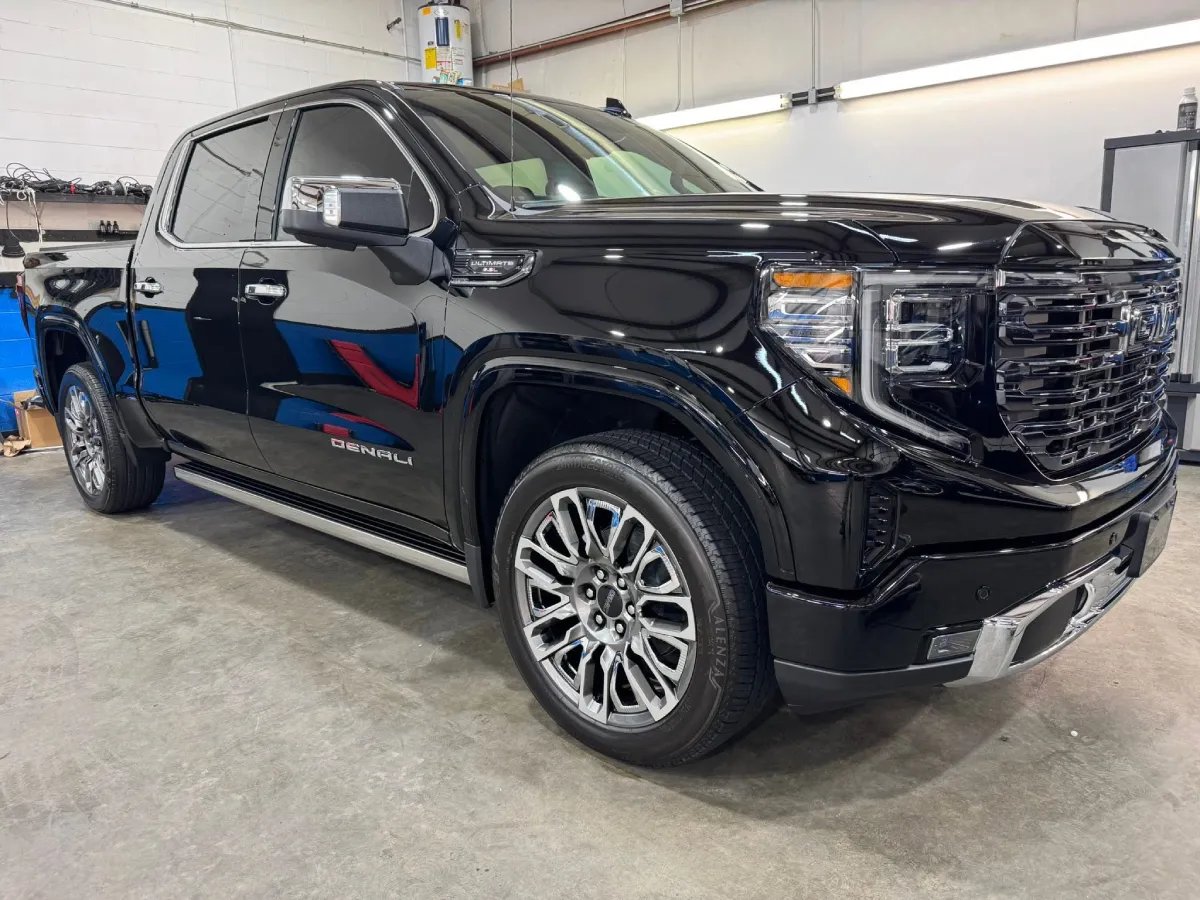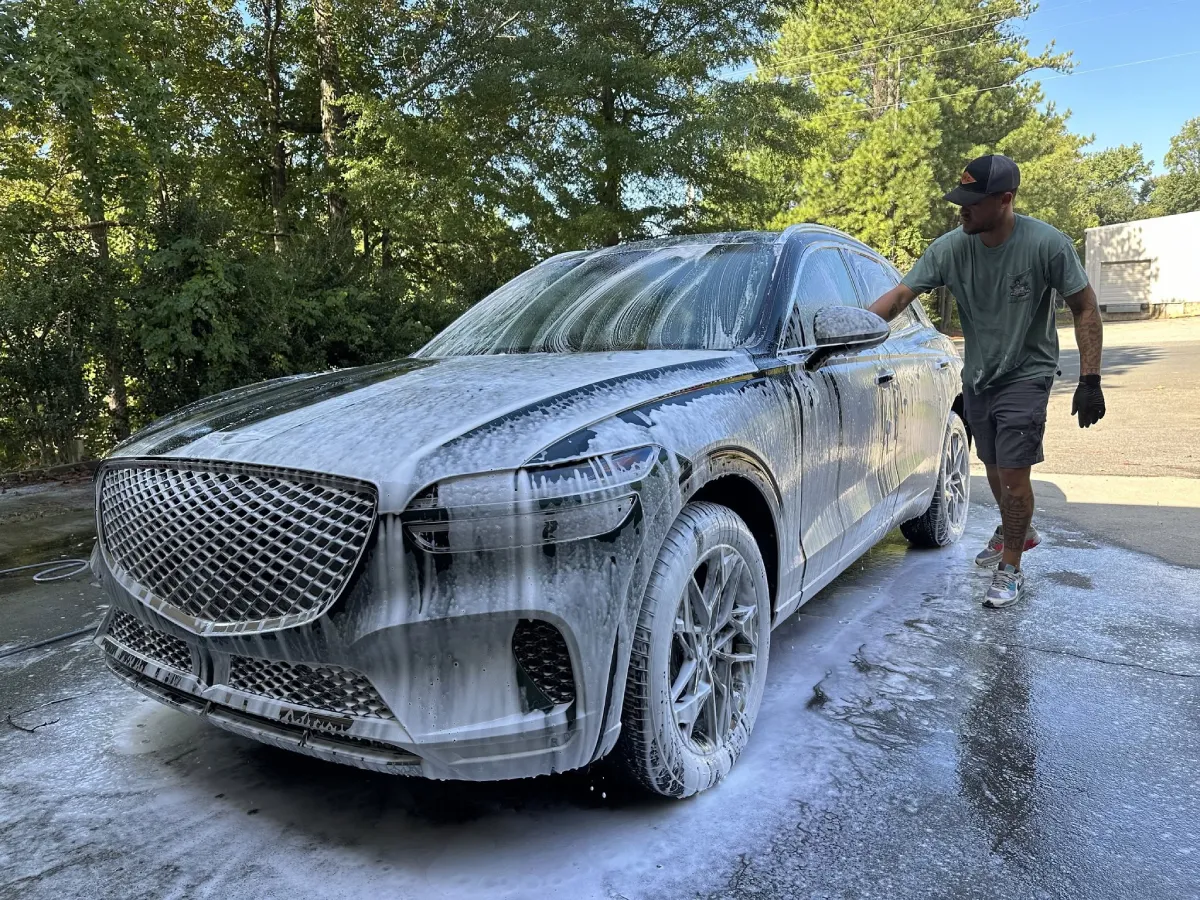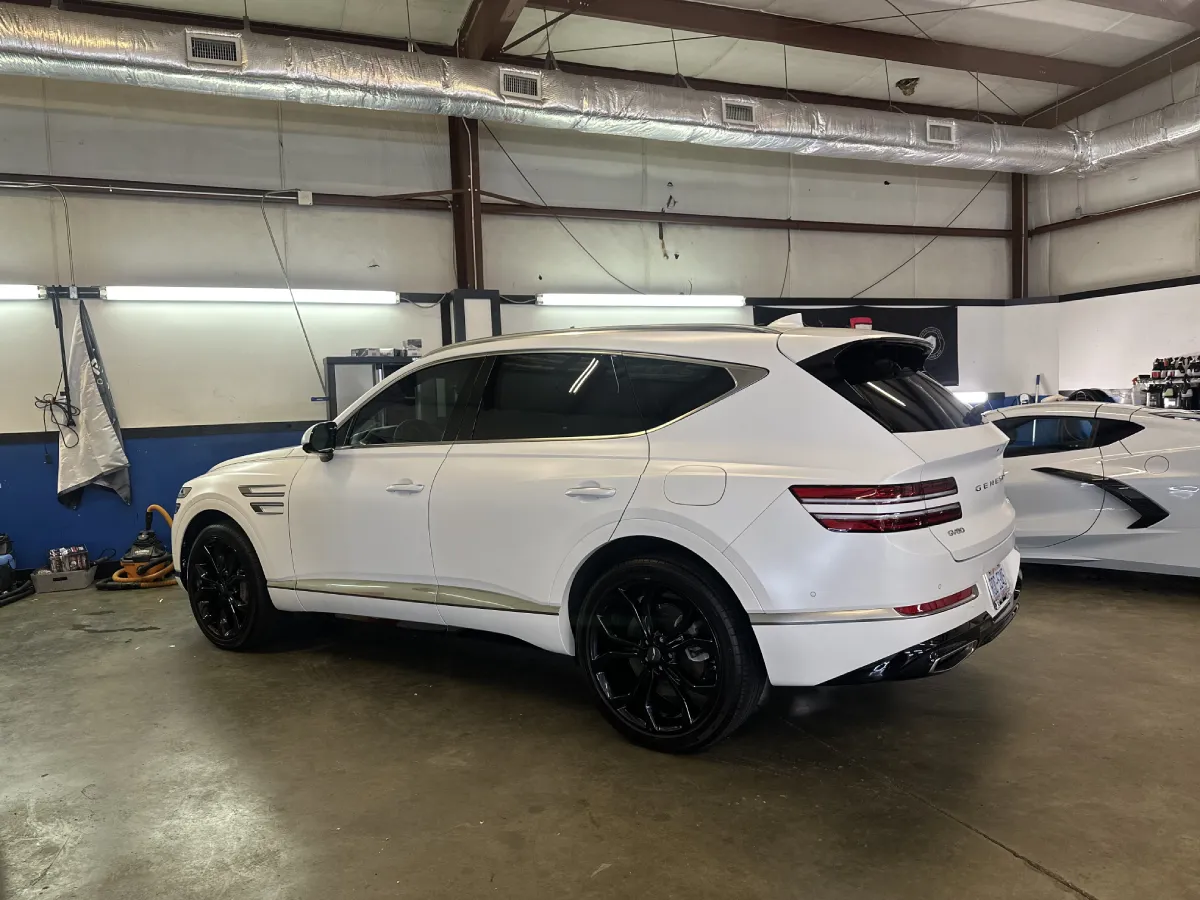
Bubbles and edge lifting in paint protection film are caused by trapped air, moisture, or surface contamination during installation, or by long-term adhesive stress from heat, washing pressure, and environmental exposure. In most cases, these issues are not due to defective film but result from installation technique, inadequate surface preparation, or improper curing conditions.
When properly installed on a fully decontaminated surface with controlled application methods, paint protection film cures into a smooth, optically clear layer that maintains strong edge adhesion and long-term durability.
How Paint Protection Film Bonds to a Vehicle Surface
To understand why defects occur, it is important to understand how paint protection film (PPF) adheres to paint.
PPF uses a pressure-sensitive adhesive (PSA) system designed to bond through physical pressure rather than heat or chemical curing. This adhesive must:
- Wet out completely against the clear coat
- Displace air during application
- Maintain uniform contact during curing
- Stabilize over time as installation fluids evaporate
Any disruption in this process can create bonding inconsistencies that later appear as bubbles or edge lifting, which is why proper installation is critical for paint protection film in Raleigh.
The adhesive bond is also influenced by:
- Surface cleanliness at a microscopic level
- Ambient temperature and humidity
- Installer technique and squeegee pressure consistency
- Post-install curing environment
Even small variations in these factors can significantly impact long-term performance.
Primary Causes of Bubbles in Paint Protection Film
Bubbles form when something prevents the adhesive from making uniform contact with the surface.
1. Air Entrapment During Installation
Air entrapment is the most common cause of bubbling. During installation, the film is floated on a slip solution and then squeegeed into place. If pressure is uneven or rushed, air pockets can remain trapped beneath the adhesive layer.
This is especially common on:
- Bumpers
- Side mirrors
- Deep body curves
- Complex recessed panels
These areas naturally create changes in tension in the film, making uniform pressure more difficult.
2. Invisible Surface Contamination
Even when a vehicle appears clean, microscopic residues can interfere with bonding. These include:
- Machine polishing oils
- Wax or sealant residues
- Ceramic coating overspray
- Road film and industrial fallout
These contaminants prevent full adhesive wet-out, creating micro-separation points that later appear as bubbles or hazy spots.
A proper decontamination process typically requires:
- Chemical pre-wash
- Iron and tar removal
- Clay bar or mechanical decontamination
- Panel wipe with solvent-based cleaner
Skipping any of these steps significantly increases the risk of defects.
3. Improper Slip Solution Management
Slip solution is used to position the film during installation. However, if it is not properly expelled or allowed to transition into tack phase, moisture becomes trapped beneath the adhesive.
This leads to:
- Milky patches
- Delayed bubble formation
- Uneven optical clarity
Proper technique requires controlled timing between the slip and tack phases, which varies with film brand, temperature, and humidity.
4. Environmental Contamination During Install
Installation environment plays a critical role. Dust, airborne fibers, or pollen can settle onto adhesive surfaces during application.
Once trapped under the film, these particles cannot be removed and may create:
- Permanent bubbles
- Raised contamination points
- Visual distortion under lighting
Controlled installation environments reduce this risk significantly.
Primary Causes of Edge Lifting in Paint Protection Film
Edge lifting is a more serious issue than bubbling because it indicates a breakdown in adhesive anchoring at the perimeter.
1. Lack of Edge Anchoring or Wrapping
Edges are naturally high-stress zones. If film is not wrapped around panel edges or properly heat-sealed, it remains exposed to:
- Airflow during driving
- Pressure washing
- Mechanical abrasion
- Debris impact
Over time, these forces weaken adhesive grip and initiate lifting.
2. Thermal Expansion and Contraction
Vehicle surfaces expand in heat and contract in cold conditions. This repeated movement creates micro-stress along adhesive boundaries.
The effect is most noticeable on:
- Hood edges
- Door seams
- Fender contours
Without proper edge reinforcement, this stress accumulates and leads to gradual separation.
3. Water Intrusion from Washing
High-pressure washing is one of the most common causes of edge failure.
When water is forced under an edge:
- Adhesive bond is weakened
- Moisture displaces bonding contact
- Drying leaves behind partial separation
Once this cycle begins, lifting tends to expand progressively.
4. Adhesive Fatigue Over Time
All pressure-sensitive adhesives experience gradual aging. Over time, exposure to:
- UV light
- Heat cycles
- Environmental pollutants
causes the adhesive to slowly lose elasticity and bonding strength, particularly at edges.
Proper installation and curing significantly slow this process.
Bubble vs Edge Lifting (Technical Comparison)
| Factor | Bubbles | Edge Lifting |
| Cause Type | Air or fluid entrapment | Adhesive bond failure |
| Location | Surface area | Perimeter edges |
| Severity | Cosmetic issue | Structural failure |
| Progression | Often stabilizes or disappears | Typically worsens over time |
| Repair Complexity | Low | Moderate to high |
Environmental Stress Factors That Influence Failure
Even correctly installed film can be affected by external conditions.
Heat Exposure
Continuous exposure to sunlight causes expansion cycles that gradually stress adhesive interfaces.
Washing Habits
Improper washing techniques, especially high-pressure jets directed at the edges, significantly increase the risk of failure.
Road Debris Impact
Sand, gravel, and road particles can initiate micro-edge damage that expands over time.
Chemical Exposure
Strong detergents or solvent-based cleaners can degrade adhesive performance if used frequently or improperly.
Installation Quality vs Film Quality
Long-term durability depends on both material engineering and installer skill.
| Factor | Installation Quality | Film Quality |
| Bubble Prevention | High impact | Moderate impact |
| Edge Durability | Critical factor | High impact |
| Longevity | Highly dependent | Moderately dependent |
Even premium-grade film will fail prematurely if installed on a contaminated surface or without proper edge finishing, a key consideration in Raleigh paint protection film applications.
Professional Installation Methodology
High-quality installations rely on structured workflows designed to eliminate failure points.
Key stages include:
- Multi-stage chemical and mechanical decontamination
- Controlled slip-to-tack timing based on environmental conditions
- Heat-assisted edge anchoring on vulnerable panels
- Post-install curing under stable temperature and humidity
These controlled steps are essential for long-term durability, especially in real-world automotive environments.
This is particularly important for paint protection film in Raleigh, NC applications where seasonal humidity shifts and temperature variation can influence adhesive curing behavior.
Common Misconceptions About Paint Protection Film
“Bubbles always mean bad installation.”
Incorrect. Small bubbles often appear during curing and disappear naturally as installation fluids evaporate.
“Edge lifting only happens with cheap film.”
False. Even premium films can lift if exposed to poor washing practices or inadequate edge finishing.
“PPF should look perfect immediately.”
Not true. A curing phase is expected, during which minor visual changes gradually stabilize.
Key Performance Characteristics
- Pressure-Sensitive Adhesive (PSA) is an adhesive system that bonds under applied pressure and allows temporary repositioning during installation before fully curing.
- Self-Healing Top Coat is a thermally responsive layer that helps reduce the appearance of fine scratches when exposed to heat, such as sunlight or warm water.
- Hydrophobic Surface Layer is a coating designed to repel water, reduce spotting, and improve overall cleaning efficiency.
- Elastic Memory Structure refers to the film’s ability to return to its original shape after being stretched to conform to complex vehicle contours.
About Ceramic Pro Raleigh
Ceramic Pro Raleigh provides advanced automotive surface protection systems, including professional Raleigh, NC, paint protection film installation, ceramic coatings, and long-term surface preservation solutions.
Each installation is built around disciplined surface preparation, precision application techniques, and structured curing protocols designed to reduce common failure points such as bubbling and edge lifting. The focus is on achieving consistent adhesion, clean edge finishing, and verified post-install performance across different vehicle types and usage environments.
This process-driven methodology ensures predictable results and long-term durability under real-world driving conditions.
In Summary
Bubbles and edge lifting in paint protection film are primarily caused by installation technique, surface contamination, and environmental stress rather than product failure. Understanding these root causes allows for better installation practices, improved maintenance habits, and longer-lasting protection performance.
For vehicle owners evaluating professional installation, disciplined preparation and expert application remain the most important factors in achieving durable, visually clean results over time, especially with services like Ceramic Pro Raleigh.
To schedule a consultation or learn more, contact us today.
Frequently Asked Questions
Why does paint protection film bubble after installation?
Bubbles are caused by trapped air, moisture retention, or surface contamination during application.
Are bubbles normal after installation?
Yes. Small bubbles may appear during curing and typically resolve naturally.
What causes edge lifting in PPF?
Edge lifting is typically caused by water intrusion, poor edge sealing, or high-pressure washing.
Can lifted edges be repaired?
Minor cases may be corrected, but severe lifting often requires reinstallation.